(W.E. Talk) Zheng Yongnian: How can joint construction of the Belt and Road Initiative deal with economic deglobalization?
ECNS - The Belt and Road Initiative (BRI) is a public good that China has offered to the world in line with the vision of building a community with a shared future for mankind. Since its launch, one of its major achievements has been its tangible contribution to infrastructure development in participating countries and regions, injecting vitality into the global economy. Yet, alongside this progress, some critics have labeled it as “neo-colonialism”.
Zheng Yongnian, Dean of The Institute for International Affairs, Qianhai under the Chinese University of Hong Kong, Shenzhen, and Chairman of the Academic Committee of the Institute of Public Policy at South China University of Technology, spoke in an exclusive interview with China News Service’s “W.E. Talk” in October 15, 2023. Retrospecting at the BRI’s trajectory after 10 years, he elaborated on the global contributions of the BRI in his eyes.
Below is an excerpted transcript of the interview:
CNS: Former U.S. Secretary of State Henry Kissinger once said that China’s BRI, which links China with Central Asia and Europe, is of profound significance. Ten years on of BRI, what impact has it had on international politics?
Zheng Yongnian: Since the 2008 global financial crisis, the world economy has lacked momentum, particularly in developing countries. The West has been too preoccupied with its own troubles, lacking both the capacity and the will to assist developing countries. China’s BRI emerged as an important initiative and project to drive global economic growth in the post-crisis era, attracting many countries to join.
From its early focus on infrastructure to today’s emphasis on the digital economy and green economy, this international public good that China provides to global society has constantly evolved. Firstly, its significance lies in boosting global economic growth. For example, anti-poverty efforts in BRI partner countries have outperformed those in other regions, as infrastructure-centered development has provided strong momentum for regional economic growth.
Secondly, since its launch, the BRI has sought regional economic co-development, rather than geopolitical dominance or world leadership as some in the West claim. Whether it is the China-Europe Railway Express, the China-Laos Railway, or the Jakarta–Bandung High-Speed Railway, China’s goal has been to support local development, spur economic growth, and advance poverty alleviation in partner regions.
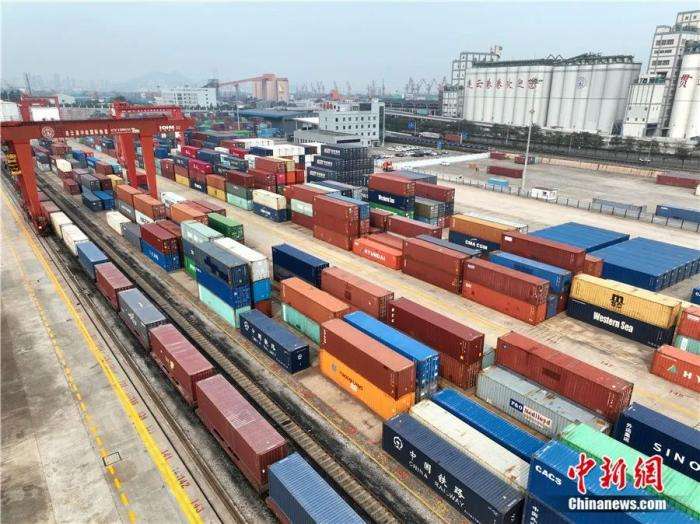
On October 9, 2023, large machinery was loading containers onto China-Europe Railway Express trains at the China-Kazakhstan (Lianyungang) Logistics Cooperation Base. (CNS)
CNS: Since its launch, the BRI has drawn criticism from some in the U.S. and Europe, who even go so far as to smear and demonize it. Why are they so opposed to the initiative?
Zheng Yongnian: The West has often slandered the BRI as “neo-colonialism” “debt imperialism” or “neo-imperialism”, which is simply imposing Western logic onto China. Since modern times, the West has insisted that “a strong nation must seek hegemony”, but China has consistently opposed this notion. Thousands of years of history show that such a path ultimately leads to destruction.
The BRI is an open and inclusive initiative. China’s consistent position is that any proposal that can promote local development—no matter which country it comes from—should be welcomed. In recent years, Western countries have also launched so-called public-goods or initiatives to counter the BRI, but none have been implemented.
Since World War II, most developing countries have maintained close ties with the West and followed Western development models. Yet many have not succeeded. The BRI merely offers an alternative—China’s approach. I believe Western demonization will persist, but China should face it calmly and let the evidence speak.
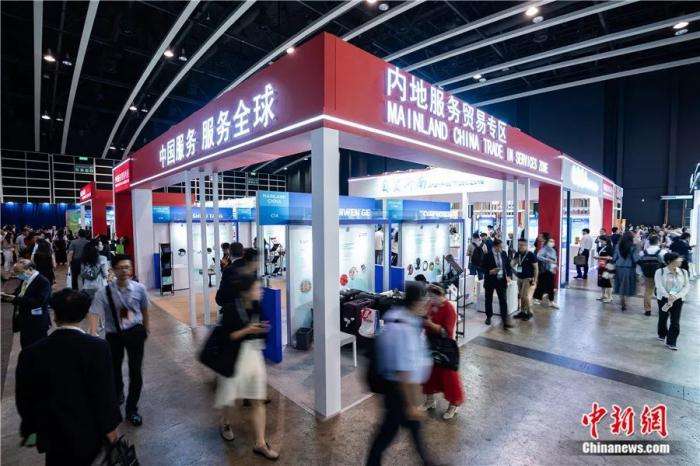
On September 13, 2023, the 8th Belt and Road Summit was held at the Hong Kong Convention and Exhibition Centre. (CNS)
CNS: Why the alternative public goods proposed by the U.S. and Europe failed to be implemented?
Zheng Yongnian: There are several reasons.
Firstly, Western countries face their own development constraints. Since the 2008 global financial crisis, many Western economies have struggled to achieve sustainable growth. Domestic problems abound, leaving them incapable of dealing with external challenges.
Secondly, they lack the tools to make such initiatives viable. The U.S. and the West has traditionally expanded abroad through capital, with governments playing a supporting role. But their proposed alternatives to the BRI are government-driven that private capital shows little interest in. Without strong government action and aligned capital incentives, failure is inevitable.
Thirdly, their offers come with too many strings. Compared with the BRI, Western alternatives burden recipients with heavy political or ideological conditions, hindering development in many developing countries.
Over the years, these issues have not improved but worsened. The U.S. and the West have repeatedly proposed loan programs for developing countries, but almost have fizzled out. These programs look more like rhetoric than action. Of course, China also hopes and welcomes these initiatives can be successfully launched in developing countries, as long as they truly help developing countries’ economy. China neither rejects nor seeks to replace the West.
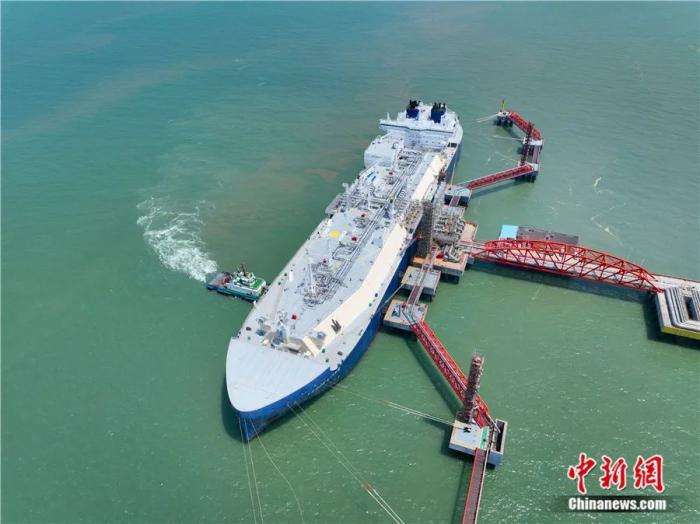
On August 13, 2023, the Cyprus-flagged vessel “Litke”, carrying 168,000 cubic meters of Russian LNG, berthed at the PetroChina Jiangsu LNG Terminal located at Yangkou Port in Rudong County, Jiangsu Province. Since it was put into operation in May 2011, Rudong has handled 630 LNG vessels from 25 countries, with 70% of them coming from BRI countries. (CNS)
CNS: Some commentators argue that Western development plans fail to meet the real needs of emerging markets and developing countries. Given the historic expansion of BRICS, what do you see as their core needs? And can the BRI meet them?
Zheng Yongnian: Development is determined by demand. Even advanced economies like the U.S. and Europe face development challenges, while developing countries need it even more urgently.
Over the past decade, China has lifted more than 800 million people out of absolute poverty, while poverty in many other developing countries has actually increased, with some stuck in stagflation.
Development is paramount, which is why so many countries are interested in the BRI’s development-oriented approach. Many developing countries have realized that political stability hinges on economic progress. As the Chinese saying goes, “Those with a stable livelihood will have a steady mind.” Economy is the foundation, politics is the superstructure, and the prerequisite for the stability of the political system is to boost the economy.
CNS: Some countries in Asia and Africa suffered heavily under Western colonialism. As the BRI deepens, the West has responded by portraying it as “neo-colonialism”. How do you think this narrative?
Zheng Yongnian: China has been helping BRI partner countries build infrastructure including roads, bridges, high-speed railways, hospitals, schools and stadiums—all essential for economic growth. Sound infrastructure enables countries to leverage their comparative advantages, then create jobs and increase tax revenues. This is also China’s own experience.
What is colonialism? Simply put, it means imposing one’s own system on another country, turning its people into servants or even slaves, or directly eradicating them altogether. Indigenous peoples in Oceania and Native Americans faced such “ethnic cleansing”. China has never done this in its history, and the West should not project its bloody past onto others.
Chinese culture is a culture of peace. China has no zero-sum mindset, but rather seeks win-win outcomes. Toward its neighbors, China advocates amity, harmony, and prosperity. From an economic standpoint, a wealthy country surrounded by poor neighbors cannot sustain its own development. Domestically, China promotes “common prosperity”; internationally, it advocates “common development”. This is China’s logic, distinct from the Western individualism-driven logic.
Former Malaysian Prime Minister Mahathir Mohamad once remarked that China had coexisted with Southeast Asian nations for thousands of years without turning any of them into colonies, while Westerners colonized the entire region soon after arriving.
Why has the BRI succeeded abroad? It is the most crucial that local countries welcome it. Unlike Western colonizers who forced others open doors with armies, BRI partners voluntarily open their doors to China. No one believes the “neo-colonialism” claim—least of all the citizens of BRI countries.

On September 17, 2023, the 5th Belt & Road Food Fest was held at Beijing Langyuan Station, where parents took their children to purchase products. (CNS)
CNS: With globalization facing headwinds, what role can the BRI play?
Zheng Yongnian: The BRI is an initiative, and it is better for all parties involved to discuss matters through consultation. China does not coerce countries into joining. I believe more and more will embrace it.
Deglobalization, spreading from the U.S. to other developed countries, has had lasting negative effects on the global economy. In this context, the BRI represents China’s solution to sustain economic globalization. The world is multipolar, and no single power can solve global challenges alone. More regional and global organizations are needed to drive development.
CNS: How do you view the future prospects of the BRI?
Zheng Yongnian: Since its launch, the BRI has accumulated considerable experience and achievements. For example, the China-Laos Railway and the Jakarta–Bandung High-Speed Railway have had strong demonstration effects. Although there were doubts in Laos and Indonesia at first, once these projects were completed and delivered significant benefits, the skepticism disappeared.
Initially, China was the main driving force. But as more countries and regions join, especially those that have improved their infrastructure and gained development momentum, they will also contribute to advancing the initiative. Despite current global economic sluggishness, the BRI will continue to progress and accelerate. Infrastructure requires years of investment at the start, but eventually, the harvest comes.
Of course, China also need constantly summarize experiences and do better in future. Issues such as debt sustainability need attention. Standards also matter: in fact, the BRI maintains high environmental and technical standards.
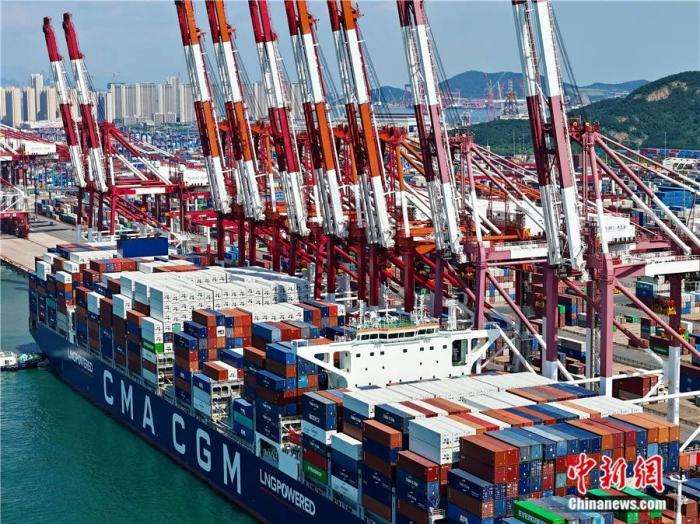
On August 30, 2023, the “Belt and Road” routes at Qingdao Port, Shandong Province were bustling. (CNS)
CNS: The BRI empowers the long-term development of participating countries. What spirit should all parties uphold in this process?
Zheng Yongnian: Pragmatism is essential. Projects must meet local needs, not Western expectations. The BRI is not designed to impress the West, but to foster local development. Each country has different needs, and only by addressing them can the BRI achieve sustainable development. Therefore, I believe the spirit should be pragmatic, cooperative, and win-win. (End)
Profile of the Interviewee:

Zheng Yongnian is Professor at The Chinese University of Hong Kong, Shenzhen, and Dean of The Institute for International Affairs, Qianhai. He serves as Editor-in-Chief of The Asian Review of Political Economy (ARPE), published by Springer-Nature; Editor-in-Chief of the China Policy Series with Routledge; and Co-Editor of the Series on Contemporary China with World Scientific.
He earned his Bachelor of Laws (1985) and Master of Laws (1988) from Peking University, and his Master of Political Science (1992) and Ph.D. of Political Science (1995) from Princeton University. He lectured in the then Department of Politics and Administration at Peking University, and held positions as Research Fellow and Senior Research Fellow at the East Asian Institute, National University of Singapore (NUS); Professor and Director of the China Policy Institute at the University of Nottingham; and Professor and Director of the East Asian Institute at NUS.
He has been a Research Fellow of the Social Science Research Council (SSRC) and the John D. and Catherine T. MacArthur Foundation. His research focuses on international relations, foreign policy, China-U.S. relations, and China’s internal transformation and external relations. In recent years, he has authored or edited nearly 100 books, including over 10 English monographs, and published dozens of academic paper in international academic journals.